.svg)
Lazy cash is money sitting in a low or no-interest checking account that would earn far more in a savings product. For the customer, it’s a quiet loss; for the bank, it’s a missed opportunity to match that balance to the right product before a competitor does it first. Most banks know lazy cash exists somewhere in their portfolio. Finding it, acting on it, and proving it worked is the hard part. Here’s what it looks like when a scenario like that runs through just some of the capabilities in Drive, from start to finish.
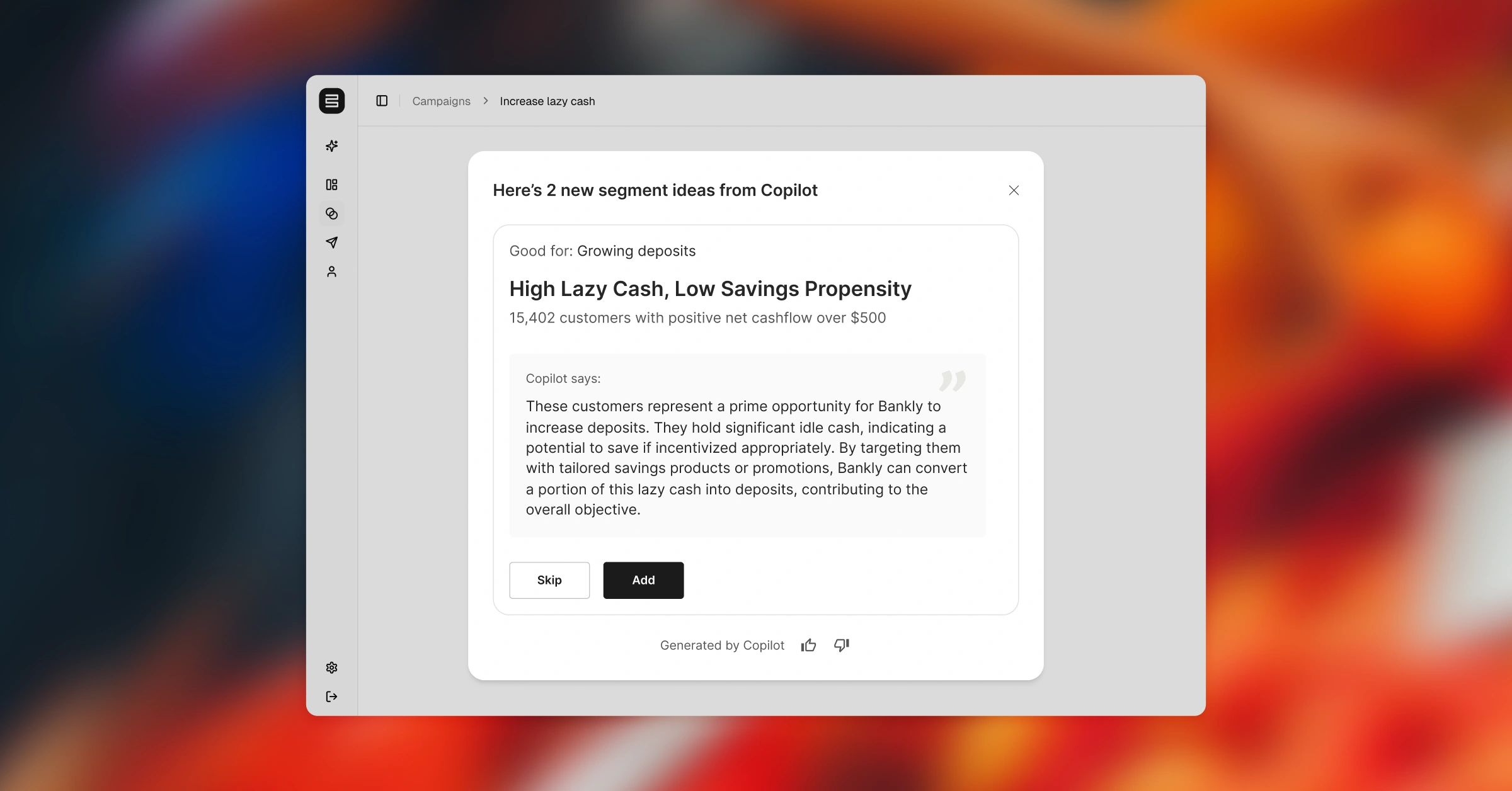
Instead of a team having to think to go looking for it, Drive’s AI agent can surface a lazy cash segment on its own. Because it’s working from the same enriched transaction data across the platform, it can spot the pattern directly: a healthy balance sitting in a low-interest account, with little or no movement toward savings products or CDs over time. The segment shows up ready to act on, built from real financial signals, and without having to wait for your data analytics team to find it.
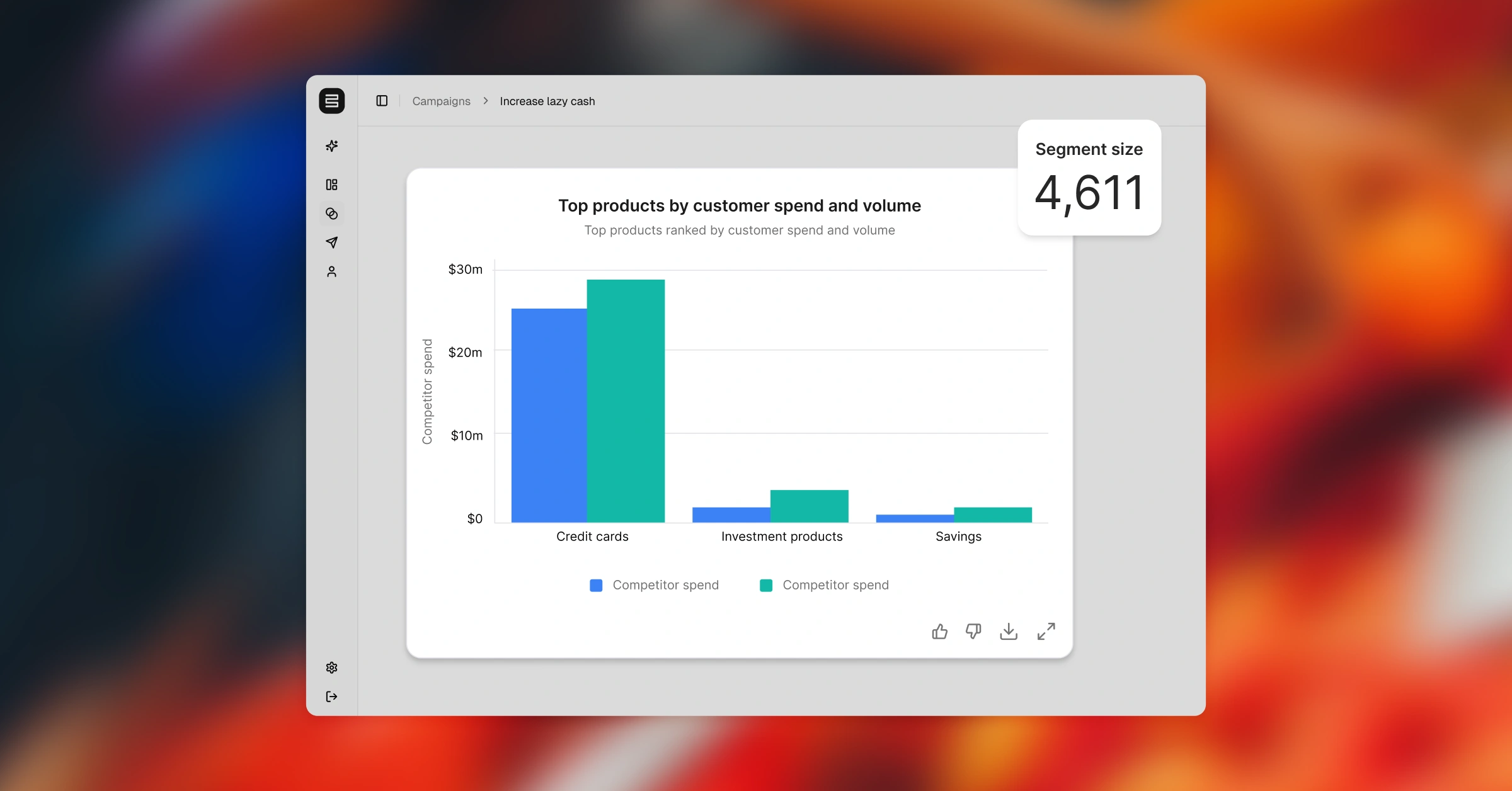
Once the segment appears, the team can dig into it through Drive’s portfolio analytics, checking its size, value and characteristics – all this utilizing dashboards and a genAI interface with rich visualizations in an active conversation. This is also where the platform can flag whether that cash is genuinely idle at the bank or slowly leaking out to a competitor with a better rate. That distinction matters. If the money’s still on the books, the goal is to move it to a better product internally. If it’s already leaking, the offer needs to be sharper and the timing tighter.
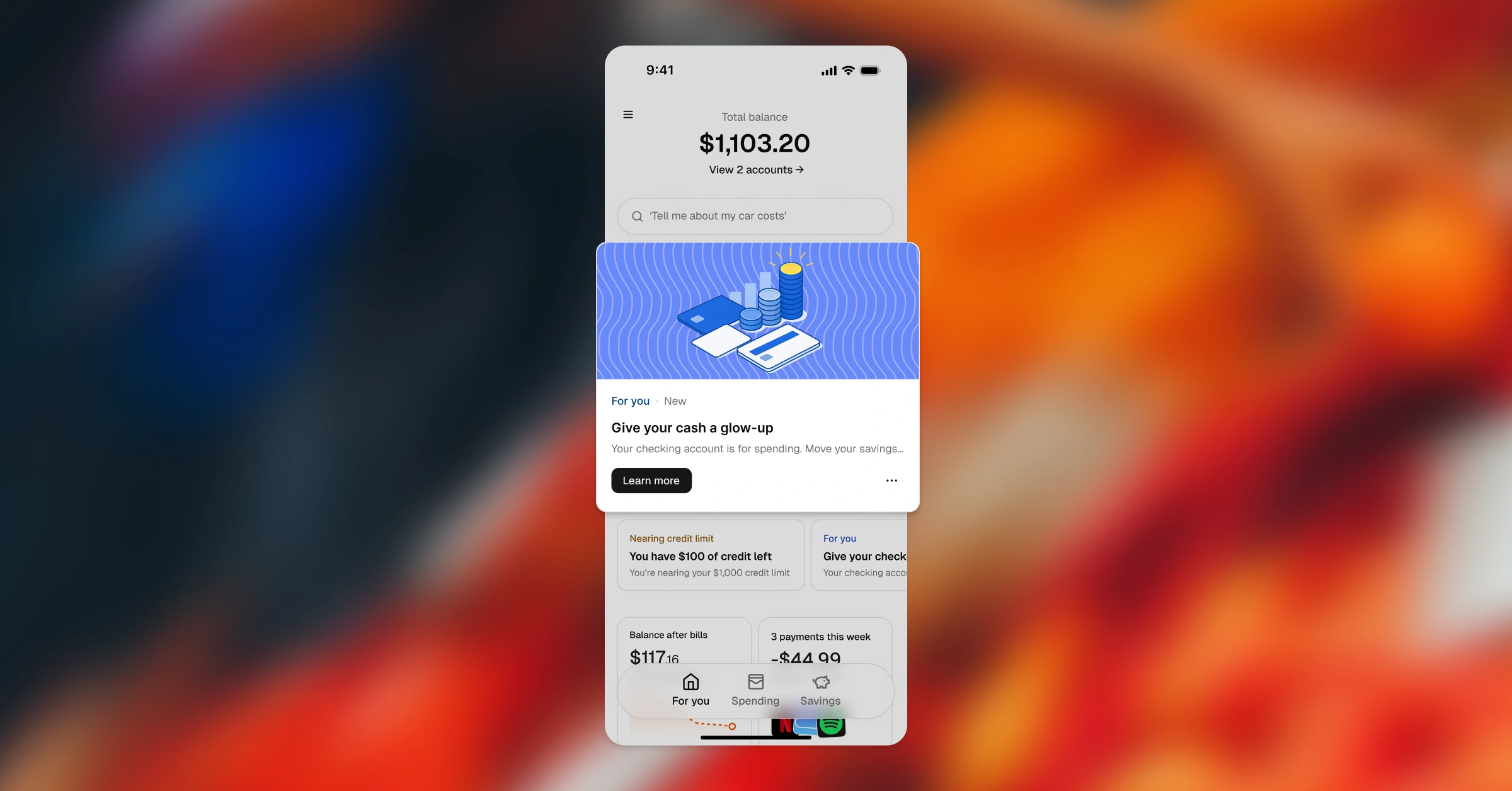
With the segment tightly defined, the next step is building the campaign inside Drive’s campaign management tools, no separate system required. For a lazy cash segment, that might mean promoting a high-yield savings account or CD. Because the campaign draws on the same enriched data used to build the segment, the messaging can speak to the customer’s actual position, using the bank’s approved tone of voice, rather than a generic pitch.
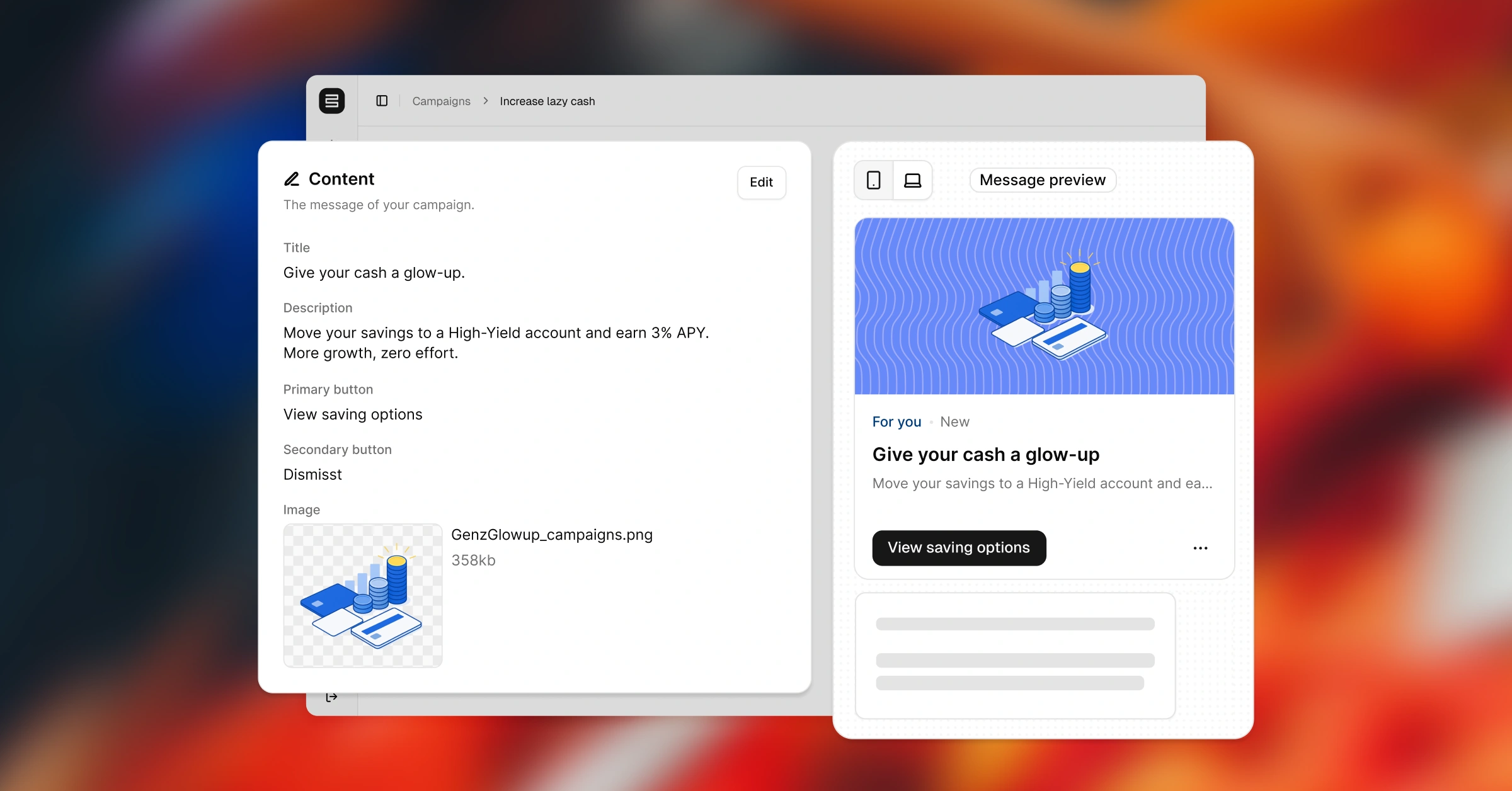
The campaign can then be delivered through Engage, showing up as a push notification or in-app message in the customer’s normal digital banking experience. Drive can schedule this for a set time or trigger it off a specific event, aiming to reach the customer at the moment they’re most likely to respond, rather than adding it to a general send.
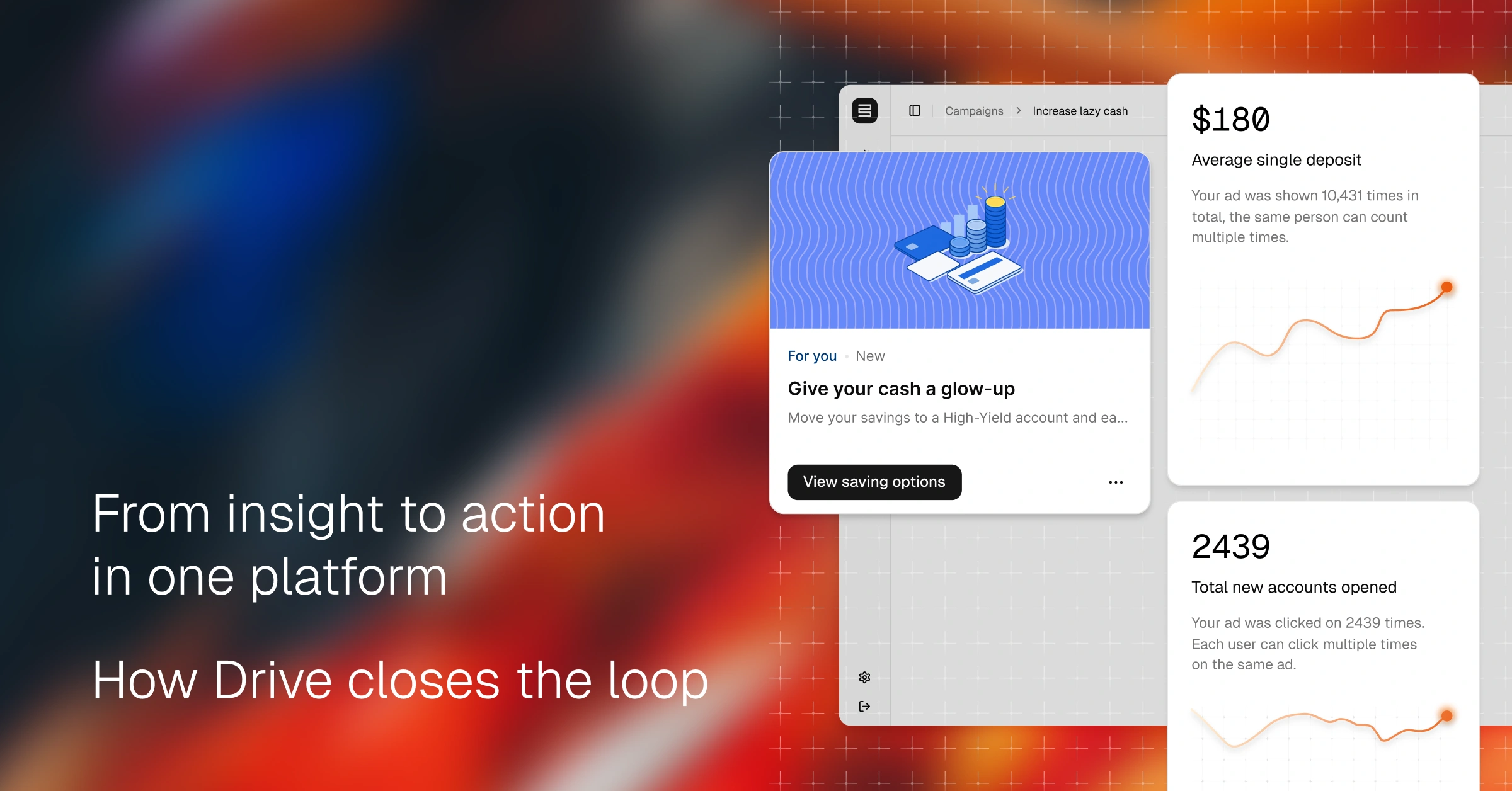
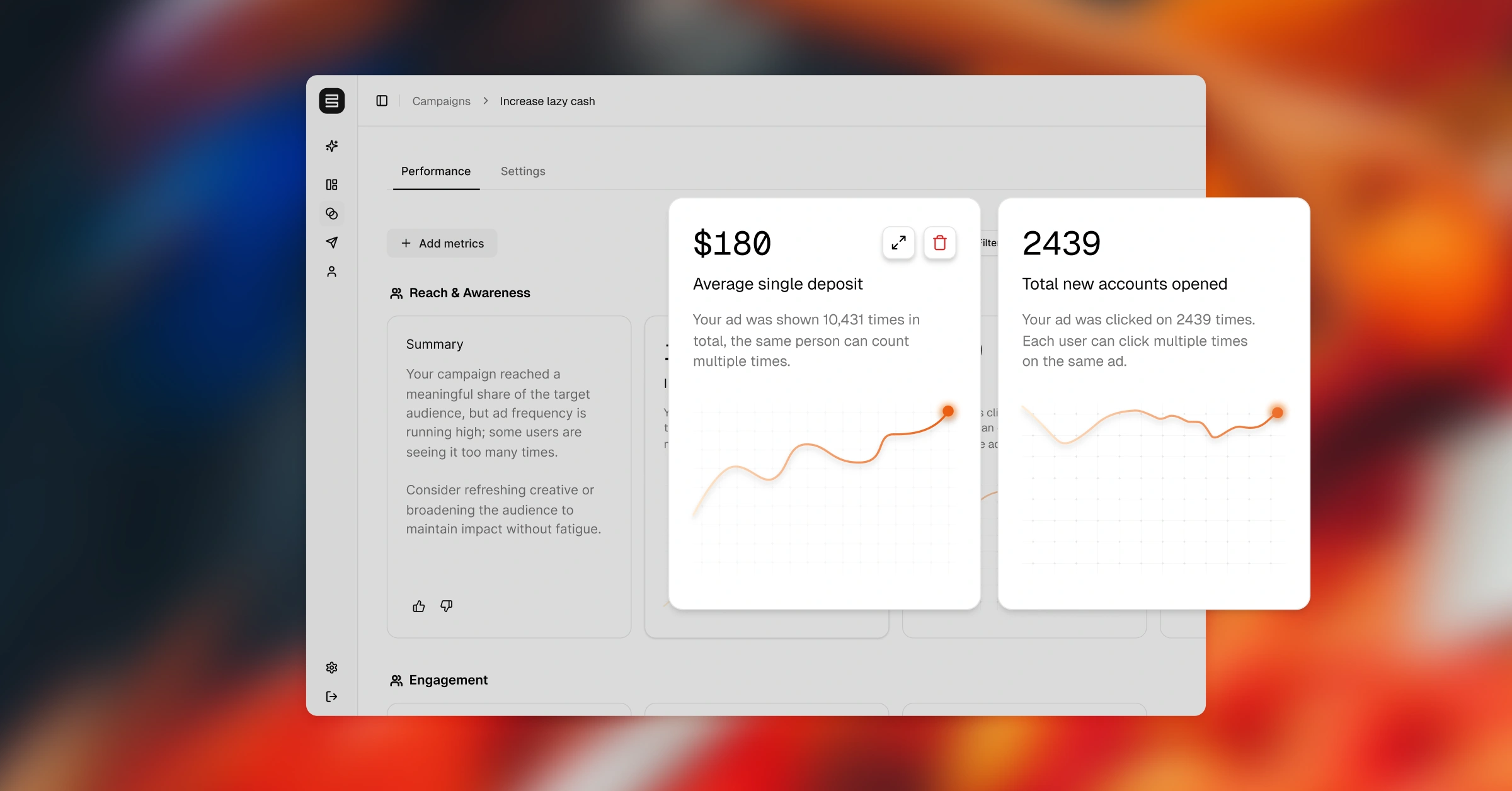
From there, Drive keeps watching the same transaction patterns and product data that surfaced the segment in the first place. Did the balance move? Was a CD opened? Did the account start earning more? Because measurement runs on the same financial signals as discovery, the platform can tell you whether the campaign actually changed behaviour, not just whether it was opened or clicked.
Lazy cash is just one example, but the same discovery → analysis → campaign → measurement flow applies wherever the underlying data supports it. The same platform can be used for spotting customers under financial pressure who may be in need of support, increasing cross-and up-sell, flagging affordability risk, or handling dispute management – and much more. Each step in that flow is modular, so it can be replaced or augmented with a bank’s existing tools for propensity modelling or decisioning where that work has already been done.
That’s what closing the loop really means for Drive: not just holding the insight, but carrying it through segmentation, into a campaign, out to the customer, and back again as a measurable result, all in one platform.
If you want to see what Drive would surface first in your portfolio, get in touch with the team today to schedule a demo.


%201.webp)