.svg)
Most banking engagement still starts with the customer. They log on and notice a fee they don’t recognize. They call because a payment didn’t go through. They close the account, and only then does anyone at the bank find out something was wrong. This is the industry default, and for a long time it worked well enough that nobody questioned it. It doesn’t anymore. In this edition of the Bud breakdown, we uncover why that's not the case anymore.
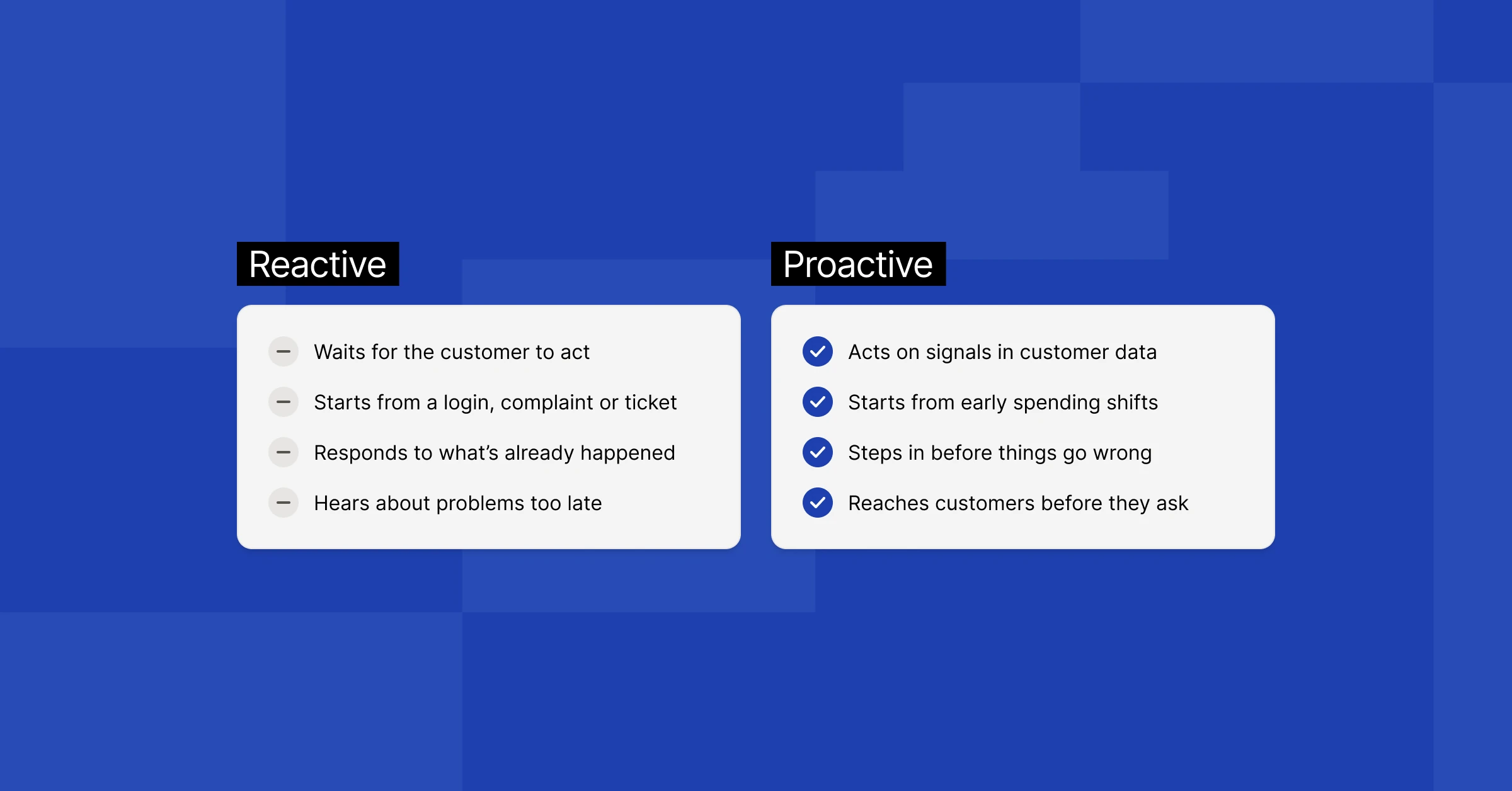
Reactive banking waits for a trigger the customer generates, such as a login, a complaint, a support ticket, or a churn event. In this model, the bank responds to what’s already happened. Proactive banking works from a different starting point. It acts on a signal detected in the customer’s data, often before the customer has said anything, sometimes before they’ve even fully registered the need themselves.
It’s a subtle shift in theory, but in practice, it’s the difference between hearing a customer complain when it’s already too late and catching early spending shifts to step in before things go wrong.
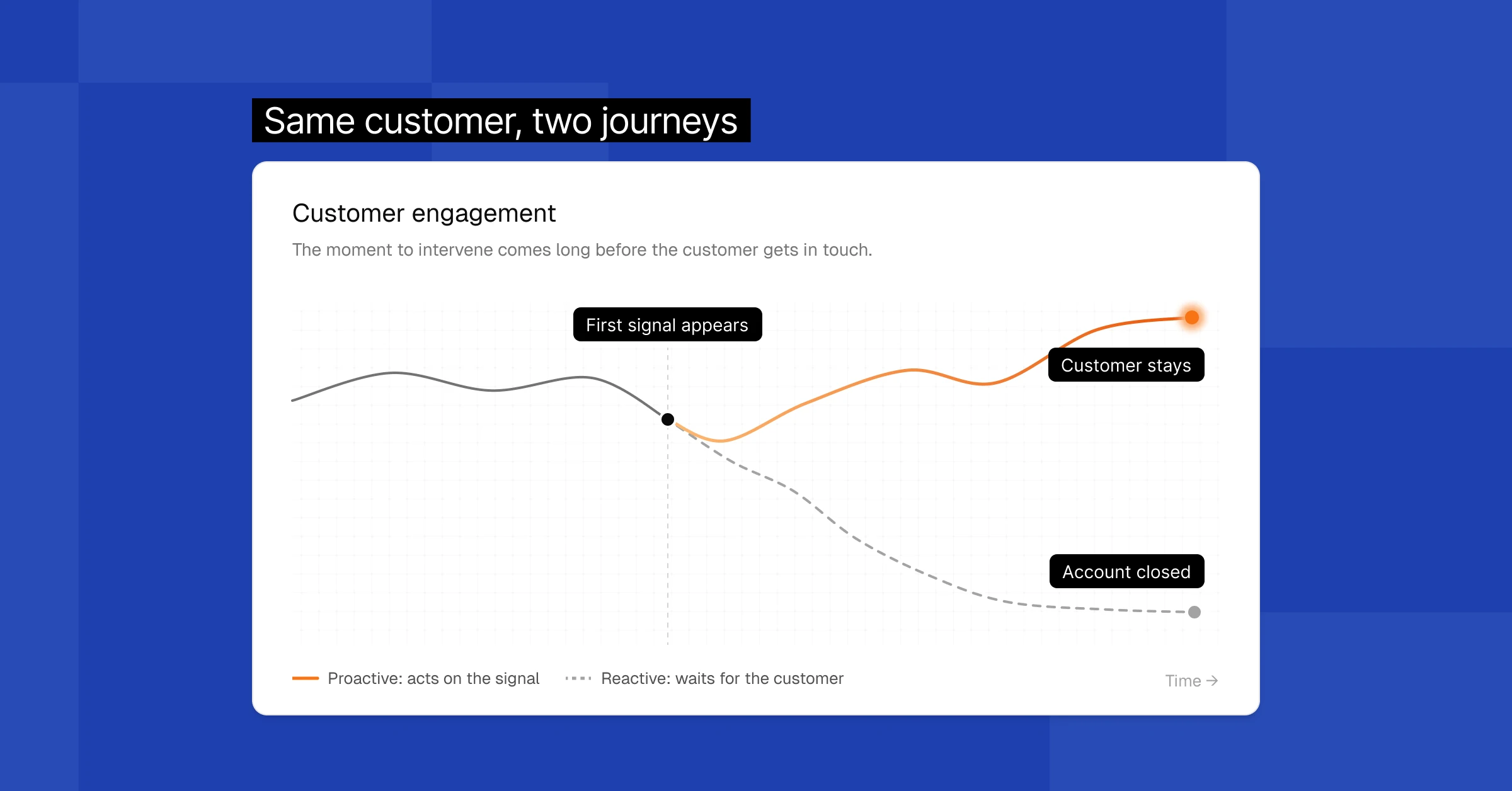
By the time a customer contacts their bank about a problem, they’ve usually already started solving it somewhere else. They’ve looked at a competitor’s rate, maybe even signed up for a new card. The contact itself is often the last step before they leave, rather than the first sign of trouble.
Churn follows the same pattern. Engagement drops off, transaction volumes thin out, card payments are replaced with bulk transfers out, and often these things happen quietly enough that nobody at the bank is looking. A reactive bank only sees the outcome, the closed account, months, or even years, after the signal first appeared. There’s nothing to intervene on because the moment for intervention has already passed.
And the comparison customers make isn’t just against other banks anymore. Fintechs and challenger apps have made proactive nudges the norm rather than the exception, so a bank that only responds when asked now looks slow by comparison, even if it’s no slower than it was five years ago.
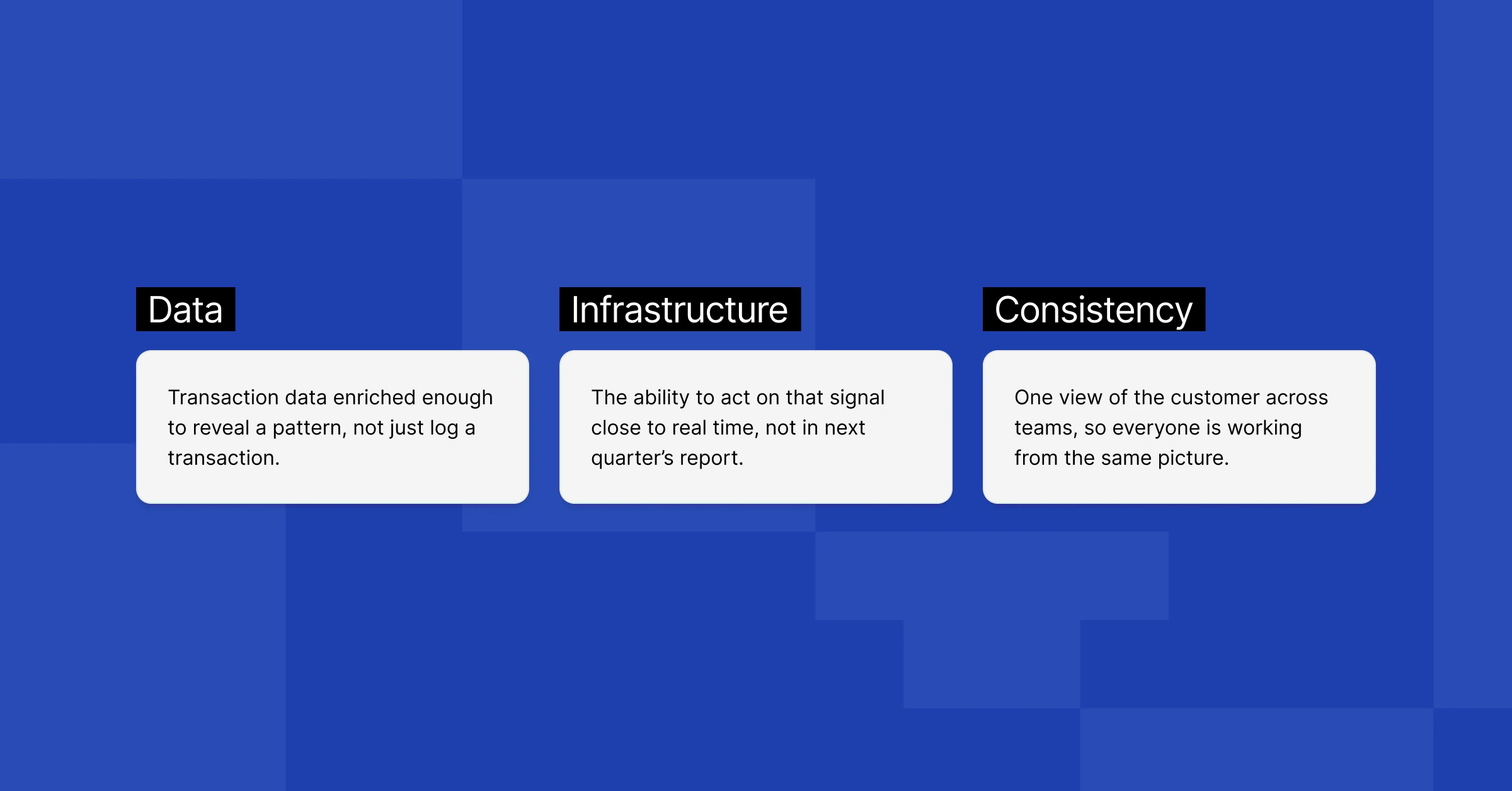
Being proactive isn’t a matter of wanting to reach out sooner. It requires three things to be true at once, and most banks only have one or two.
This is close to what “Every customer, known. Every opportunity, found” is meant to describe in practice: a system that can hold all three of those conditions at once.
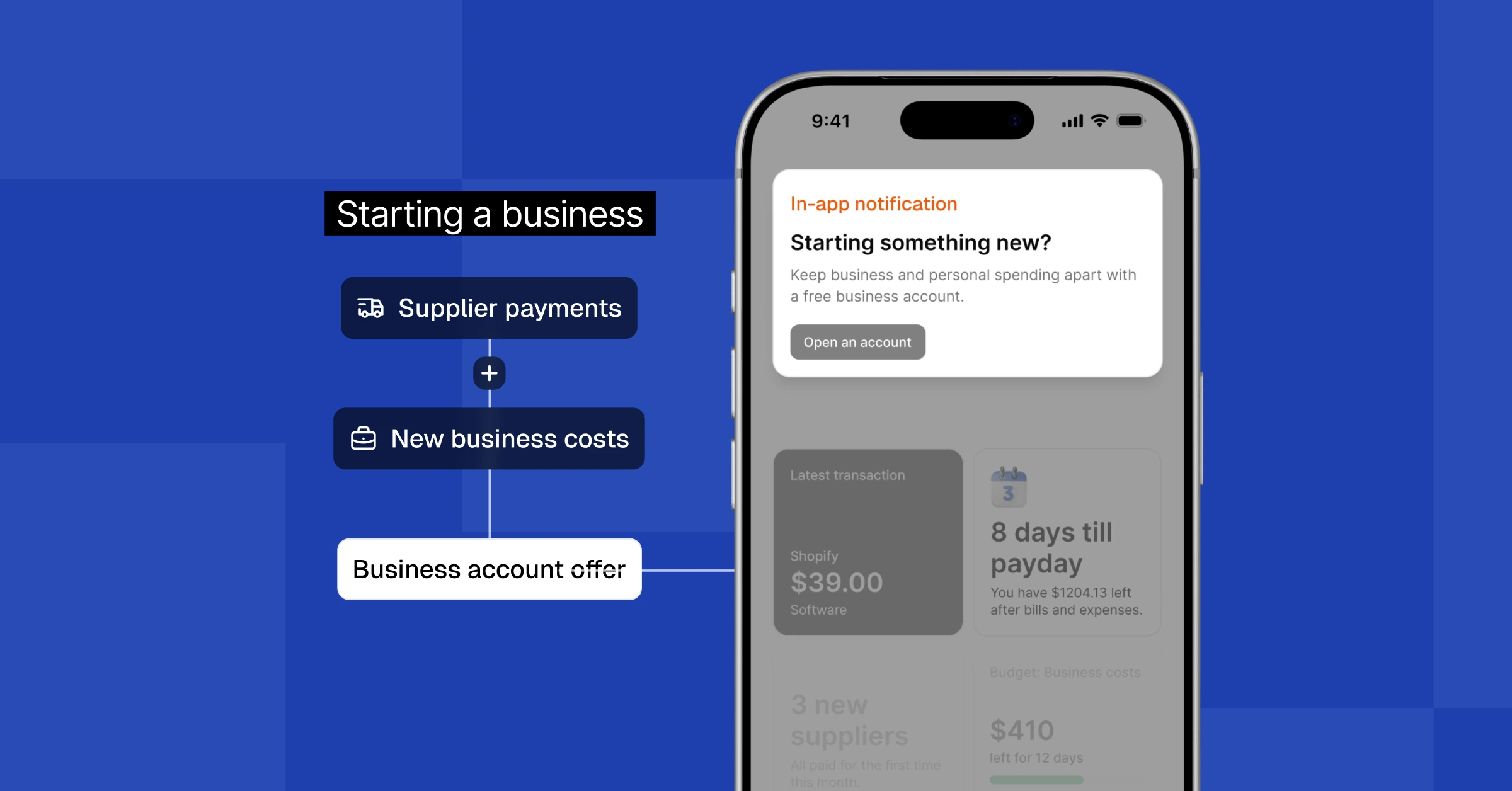
Take a customer whose transaction pattern suggests they’re ready for a HELOC. Spotted early enough, the bank can reach them weeks before they’d think to shop rates themselves, rather than finding out after they’ve already applied somewhere else. Or a run of transactions that points to a new business being set up, well before that person walks into a branch or opens an account with a competitor who happened to notice first.
Churn works the same way, just in reverse. A change in engagement, fewer logins, smaller balances moving through the account, flags early enough that there’s still time to act on it. Rather than trying to predict the future, banks simply need to spot existing patterns in data and have the processes ready to act on them.
It’s worth naming the obvious concern directly: proactive can tip into unsettling if it’s handled badly. Nobody wants their bank acting like it’s been watching too closely. The distinction is about how the signal gets used. A HELOC nudge based on home-improvement spending reads as helpful, because it’s the kind of thing a good bank teller might have mentioned anyway if they happened to notice. The same signal, delivered with language that makes it obvious the bank has been tracking a pattern over time, or surfaced somewhere the customer wasn’t expecting to be reached, reads as invasive instead – maybe even creepy. Proactive banking done well stays inside the relationship the customer already expects to have with their bank: familiar channels, familiar tone, and nothing that makes them wonder how much the bank has actually been watching.
At its core, reactive banking is an expensive habit. The costs hide in customer support hours and last-ditch win-back offers for accounts that shouldn't have been at risk in the first place. Retention efforts usually try to repair damage that a proactive approach would have prevented early on, leaving teams constantly playing catch-up.
When a bank waits too long, it loses far more than an individual transaction. The underlying relationship breaks down, and customers quietly take their business to whichever fintech notices their needs first.
This is one of the problems Bud’s built around. Enrich turns raw transaction data into the kind of pattern worth acting on. Drive surfaces those signals while they’re still relevant, and, together with Engage, lets you reach the right customer with the right message at the right time, inside the bank’s existing channels.
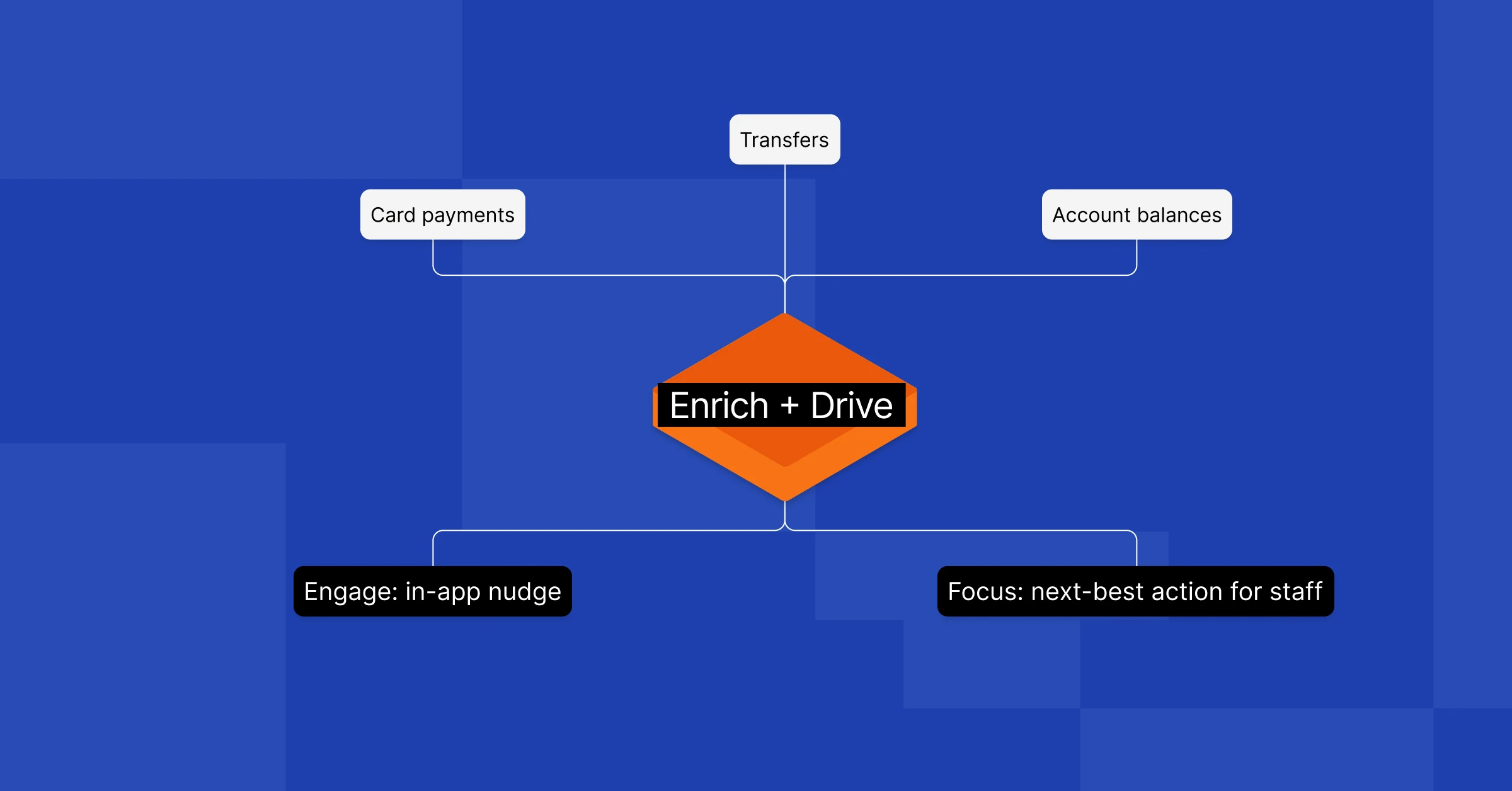
The same signal needs to reach the frontline staff too. A customer might call in or walk into a branch before any digital nudge goes out, and the person they speak to should see what the bank already knows rather than starting from a blank screen. That’s what Focus does. It gives staff a 360 view of the customer alongside recommended next-best actions, built from the same signal the customer sees reflected in their own digital channels, so nobody’s working off a different picture depending on which door the customer walked through.
If you’re trying to work out how to take your institution from reactive to proactive, or what it would take to move, get in touch with the team today.
______________
Reactive banking responds to something the customer has already done, like a login, a complaint, or a closed account. Proactive banking acts on a signal in the customer’s data before they’ve raised it themselves, often before they’ve fully registered the need.
By the time a customer contacts their bank about a problem, they’ve often already looked elsewhere for a solution. Reactive banks only see churn and dissatisfaction after the fact, once the moment for intervention has passed, while proactive competitors are already setting the standard customers expect.
Three things generally have to be in place: transaction data enriched enough to reveal meaningful patterns, infrastructure that can act on those patterns close to real time, and a consistent view of the customer across the different systems each team relies on.
Not quite. Personalized marketing usually still waits for a campaign cycle or a customer action to trigger a message. Proactive banking is built to detect a signal and act on it close to when it happens, independent of a scheduled campaign.
Bud’s Enrich, Drive, Engage and Focus products cover the three requirements above: turning raw transaction data into usable signals, using those signals to send the right message to the right customer at the right time, through channels that feel consistent with the bank’s normal relationship with the customer.


%201.webp)