.svg)
Understanding the customer remains the top priority for financial institutions worldwide. In some cases, this shows up as physical expansion. JPMorgan Chase plans to open more than 160 branches across 30+ US states in 2026. Others are investing heavily in AI and automation. Bank of America spends around $12 billion annually on technology, with $4 billion allocated to development—much of it supporting Erica, its AI-driven chatbot.
So where does that leave the rest of the industry, particularly smaller players? Staying relevant in a landscape shaped by deep customer understanding is a real challenge. Adopting elements of these strategies, in a way that fits their scale and strengths, may be the most effective path forward. We are at a point where advances in technology, rising customer expectations, and the continued evolution of financial services are creating both pressure and opportunity. In response, we’ve focused on enabling bank employees to engage with customers in a deeper and more meaningful way.
Bud’s core priority has been to build a comprehensive understanding of financial data, with the goal of becoming a central customer intelligence hub. This foundation improves the systems and interactions that depend on it, including the branch and contact centre experience.
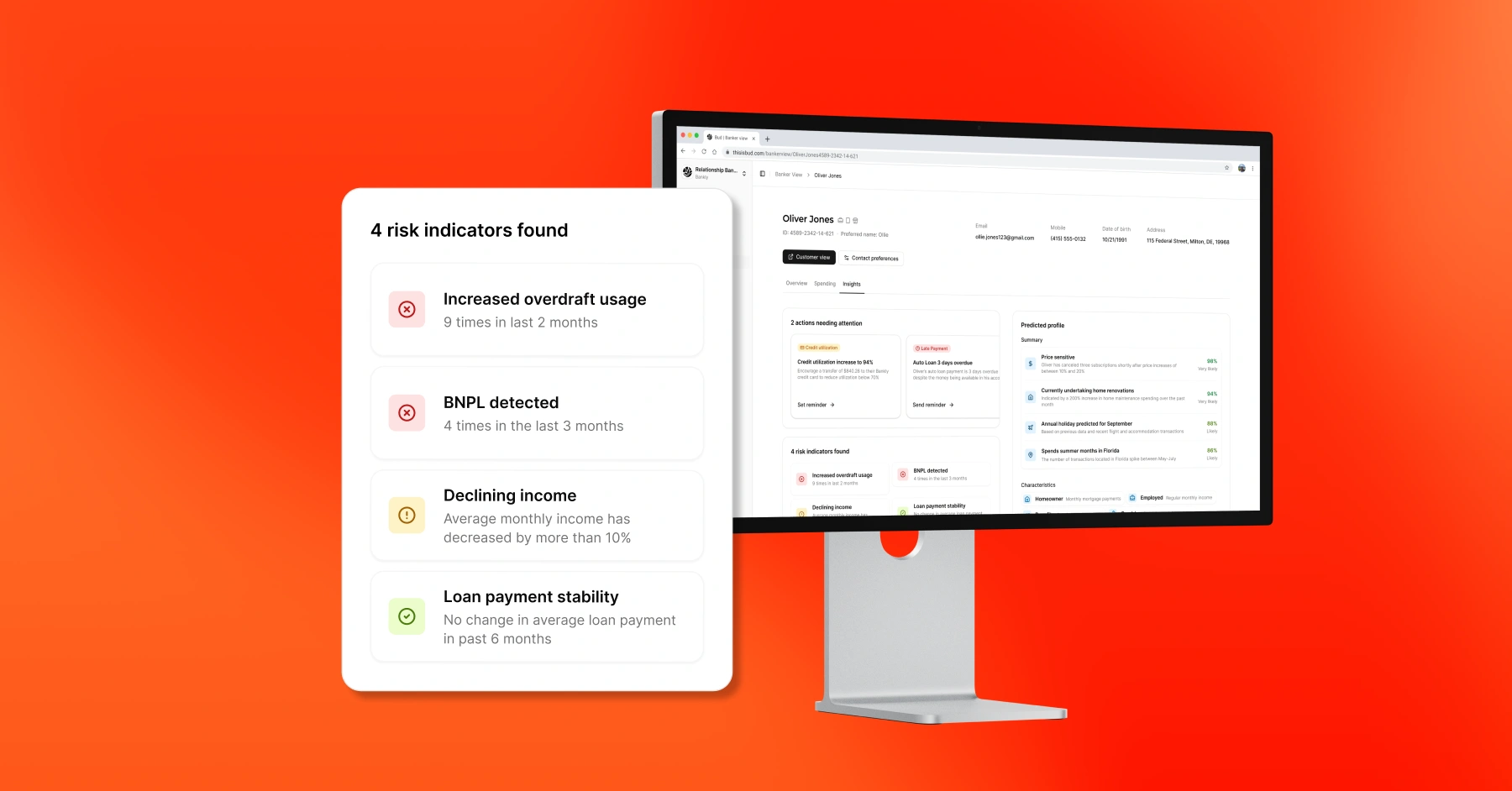
Focus, our newest product, is designed to help employees understand the customer more effectively. It brings together financial data and supports routine tasks related to transactions and products, while extending far beyond that baseline. Because of this depth of understanding, we can generate multiple layers of insight that create a more complete and practical view of each customer. These insights are delivered in a way that supports employees directly, reducing the time and effort required to prepare for interactions.
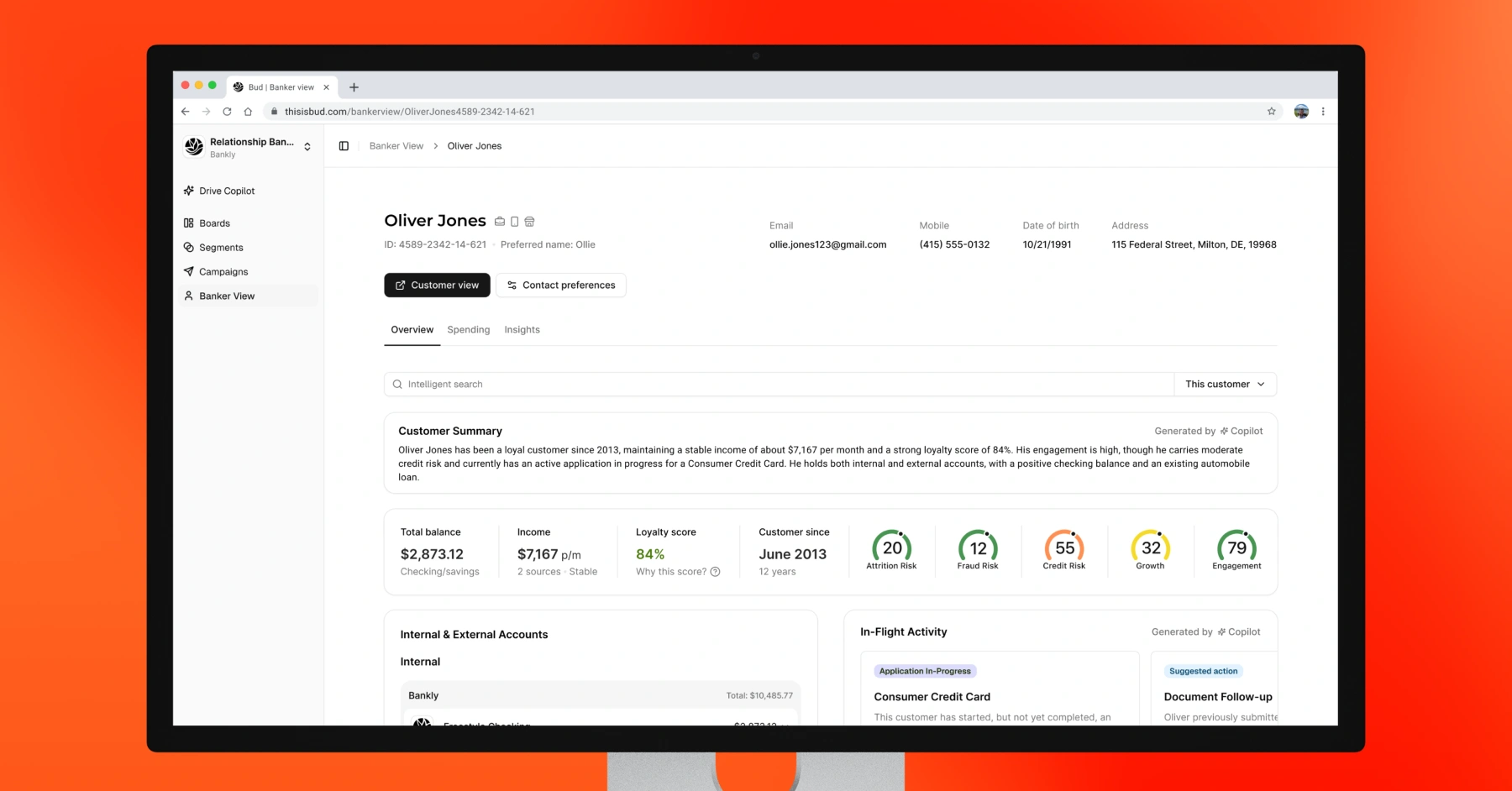
At its core, Focus builds on the Bud platform’s ability to generate different types of customer insight. It can assign characteristics that describe a customer’s lifestyle, habits, financial situation, and even travel patterns. It can place those insights in context by comparing them with relevant peer groups. It can also align with the bank’s internal language, reflecting the segments and categories each customer belongs to.
This is combined with a detailed view of financial behaviour to produce a predicted profile, highlighting areas that may become important. These include potential risk signals, changes in loyalty, and upcoming liquidity events. Each is summarized, prioritized, and supported by underlying data.
Focus can then translate this understanding into next best actions. By combining financial data with knowledge of the institution’s products and services, it helps employees identify relevant recommendations and shape more effective conversations. These capabilities are flexible and can support a range of roles—from relationship managers conducting in-depth customer sessions, to contact centre teams handling complex queries, to analysts investigating specific cases.

The strength of the Bud platform is that this intelligence remains consistent across the organisation. The same underlying data, models, and insights are shared across products. While each component can be used independently, combining Focus with Engage (supporting digital banking experiences) and Drive (powering segmentation, campaigns, and insights) creates a unified intelligence layer. This helps financial institutions keep pace with changes in both technology and customer expectations.
If you’d like to see how Focus could fit into your existing workflows, or explore how Bud can support your approach to customer intelligence, get in touch with the team.


%201.webp)