.svg)
In this series, we usually cover product features on our platform. Agentic banking is a different case; it’s not a feature so much as a shift in how a bank operates. So, it deserves a proper explanation before we get into how Bud fits in.
If you look the word up on Google, it defines agentic banking as “the use of autonomous AI agents that reason, decide, and execute multi-step financial tasks end-to-end through secure APIs”. There are actually two main aspects to this.
The first relates to agentic activity on behalf of the end customer. Picture personal agents optimizing the use of financial products and services, making autonomous decisions for the owner of the account. This could even potentially be across multiple banks, not just one. And this is actually already happening: desktop agents can perform tasks on a customer’s behalf across multiple devices today. Because so much of banking now runs through digital interfaces rather than face-to-face interactions, this is a fast-moving space with real potential to change how customers deal with their financial providers. But since it sits outside the bank itself, it’s not where Bud plays a part.
The second aspect is internal, and the one we focus on: agentic banking as the natural next step up from workflows and algorithmic operations inside the bank. Mid- and back-office teams work under real constraints, so the line between an algorithm and an agent can blur, and autonomy is often limited. Even so, agentic banking is expected to bring a meaningful boost to efficiency and productivity across the bank.
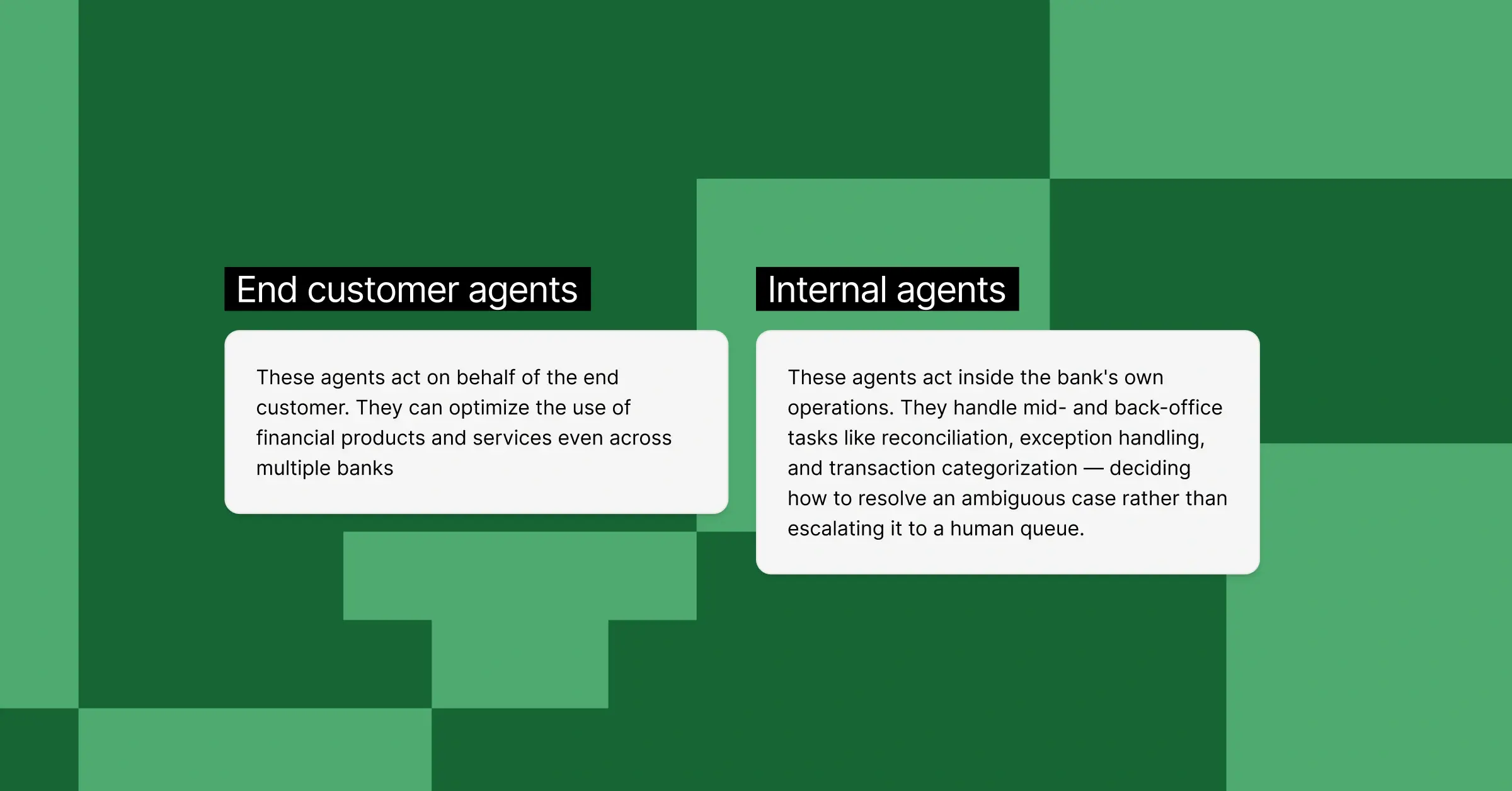
One of the biggest advantages of an agent is its ability to act with minimal human intervention, even when the data or the situation departs from the ideal path. An unclear answer, a missing payment, an incomplete data history; normally, any one of these would divert a process into manual review. Agents, by contrast, can move off a fully pre-defined path and make adaptive decisions mid-task.
To get the most out of that capability, every available piece of information (even if incomplete) needs to be good quality, and ideally structured so it can be aggregated and transformed. That’s what allows training and processing to focus on the signals that actually matter, rather than the noise that inevitably comes with it.
This is where Bud’s data enrichment, and its ability to extract information and generate customer and population insights, becomes a major enabler. With consolidated, cleaned, and enriched data running through Bud’s customer intelligence layer, banking agents at each financial institution can operate more efficiently.
There’s real value in higher-quality data, in taking a holistic view of each customer, and in doing so consistently, across your whole portfolio.
Bud’s approach to agentic banking goes further than enabling other institutions’ agents. We also run our own internal agents across a wide range of tasks:
There are more besides, covering a growing set of applications across the customer intelligence layer. And because many of these agents rely on natural language to interact with users and other systems, the data and insights on the platform are also exposed via an MCP server, connecting with any agents already operating inside the financial institution.
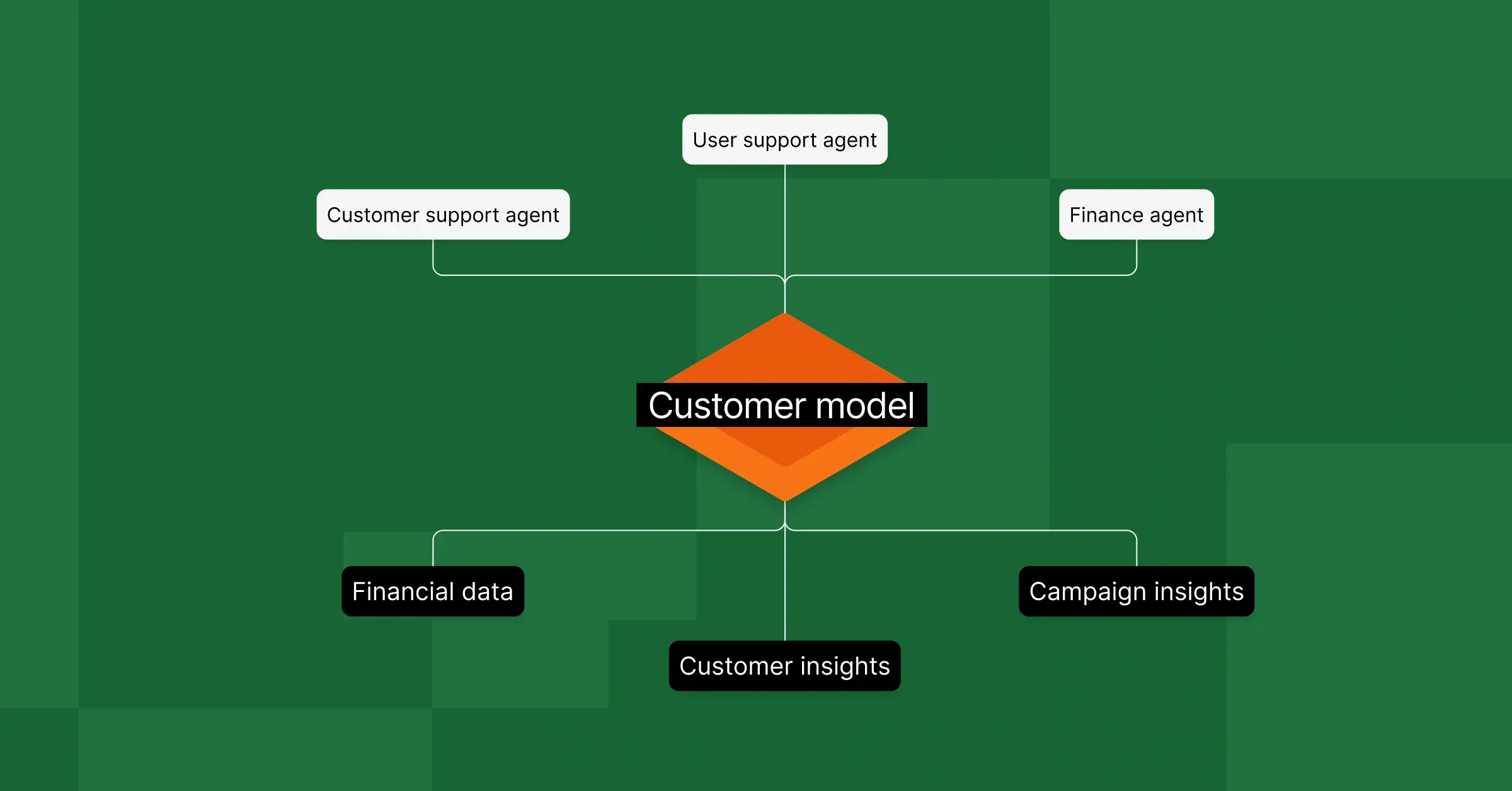
The future of agentic banking is a mesh of interconnected agents with varying degrees of autonomy. Some will work independently, some supporting a human user, some operating under direct human control. For that mesh to function, every agent needs a shared, common understanding of each customer. That’s why the customer intelligence layer matters so much.
The Bud platform already supports this today. The clearest example is our end-to-end marketing campaigns capability: raw data becomes customer insights, insights become segments built around characteristics that matter, and those segments drive hyper-personalized customer communication tied directly to the bank’s revenue objectives. Every step is automated (tracking feedback, adjusting to changing data and responses, delivering “segment-of-one” messages), and it integrates with external tools at any point in the journey, sending real-time data and triggers out, and taking in feedback and data from outside.
Agentic banking isn’t one single application. It’s a shift in how financial institutions do business, and there’s no better place to start than the data already sitting inside the bank, underused and mismatched across internal systems. Get in touch today to find out how Bud can help.


%201.webp)